October 09, 2026



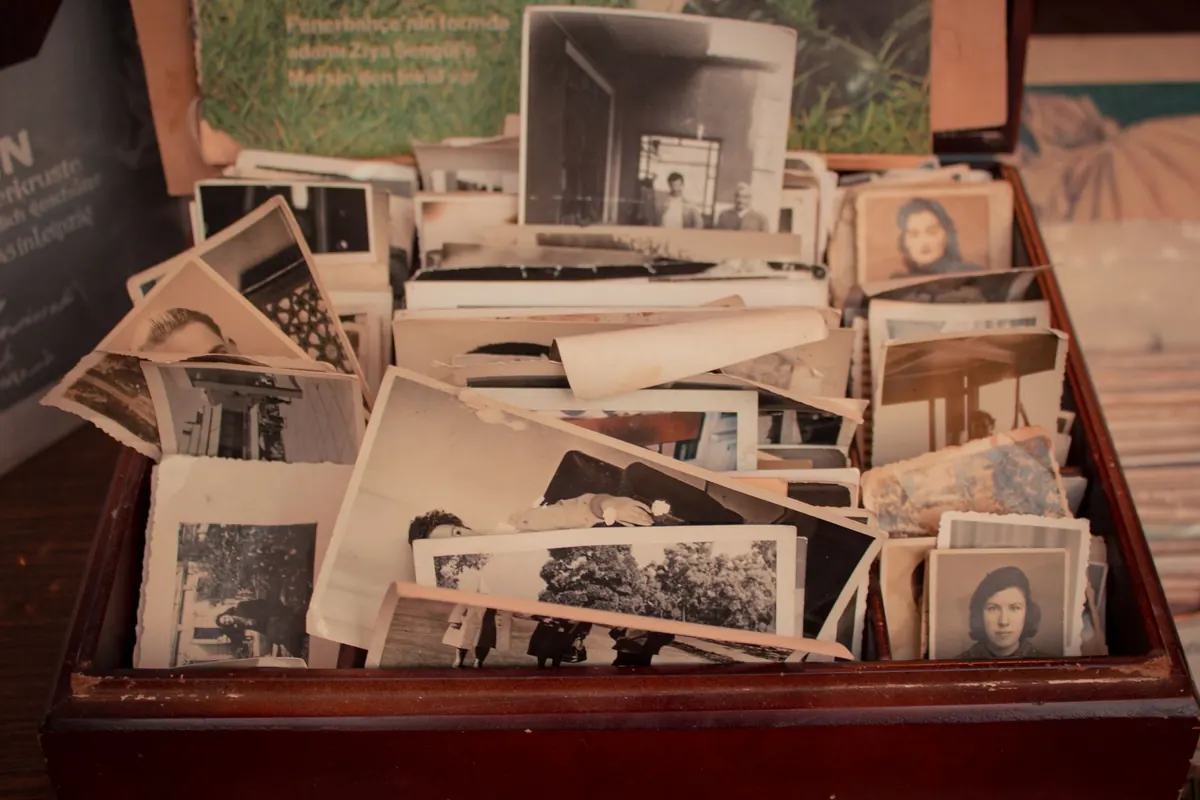
There is a particular kind of box that follows people from house to house without ever being opened. A shoebox with a rubber band round it. A padded envelope from a relative's house clearance. A carrier bag of prints that went into a cupboard years ago and has been quietly multiplying ever since. Nothing is wrong with these boxes, except that nobody looks inside them — which rather defeats the point of keeping the photographs at all.
What follows is a checklist for getting from that box to something better: albums you actually open, and labelled boxes you can find things in. It is not a project for one heroic weekend. It is a series of short, repeatable sessions.
Sorting goes wrong when it happens on the floor of a spare room with no light, no bin bag and no plan. Give yourself half an hour of preparation first. You need a clear table, decent daylight or a lamp, and four containers: keep, let go, not sure, and a small tray for anything that needs a decision from somebody else. Add a soft pencil, a sharpener, sticky notes and a pen.
If you are handling very old or fragile prints, wash and dry your hands first, hold them by the edges, and keep food and drink well away. Then time-box it. Forty-five minutes is a good session. When the timer goes, stop, even mid-pile. A box that is half sorted is progress; a box abandoned after three hours of nostalgia is not.
Pick up one box. One. Tip it out and start moving prints into the three piles fairly briskly. The temptation is to stop at every second photograph and remember the day it was taken; do that and you will sort fourteen pictures an hour. If a print pulls you in, put it in "not sure" and keep going. You can linger over the keeps later, with a cup of tea and no timer running.
Bundling by decade or by household helps, but don't chase perfect order yet. The job of the first pass is simply to reduce volume.
Keep:
Let go, or pass on to someone who wants them:
Two of those need a caveat. If someone has asked you not to keep a photograph of them, honour it. And if a print is the only record of a person or an event, quality matters far less than existence: keep it, write down what you know, and move on.
Self-adhesive albums are the main offender. The pages yellow, the adhesive dries and the prints cling. Never pull. Try easing a print free with a thin plastic card, or a length of unwaxed dental floss slid behind it, working slowly from a corner — and stop the moment the surface of the print starts to lift. If you are dealing with something irreplaceable, such as an early studio portrait or a wartime photograph, leave it where it is and photograph it as it is. A conservator can advise on genuinely valuable items, and the sorting can wait.
Put them in an envelope marked "Who is this?" and ask around at the next family gathering. Give the envelope a deadline — a year, say — and then decide. Without a deadline, the mystery pile quietly becomes a fourth category and the whole system stalls.
Look for the clues in the frame: clothing, cars, hairstyles, the width of the border, whether the print is black and white, and any studio stamp on the back. "Probably 1974" is far more useful to whoever inherits the box than a blank reverse.
This is the step most people skip, and it is the one that makes the difference between a sorted collection and a box of anonymous paper.
Use albums for the prints you genuinely want to look at: a wedding, a childhood, one family per decade, a single memorable trip. Look for archival sleeves made from polyester, polyethylene or polypropylene. Avoid PVC, which can give off gases that damage prints over time. Leave a little breathing room so pages are not crammed, and don't feel obliged to fill every slot.
Everything else can live in an archival box divided by decade, family or theme. Stand prints upright rather than stacking them flat in heavy piles, and keep the box somewhere cool, dry and stable — a bedroom cupboard or a shelf is better than a loft, a garage or a damp cellar. Annotate the outside. If you want digital copies for sharing, scan as you sort, but remember that scanning is not sorting; it creates another pile, this time on a hard drive.
Here is the whole thing reduced to one session. Put a single box on a table in decent light. Set out three containers and a pencil. Start a forty-five-minute timer. Sort what you can, label ten photographs properly, put the uncertain ones into an envelope marked with today's date, and write a label on the outside of the box. Then stop, and put the box somewhere you will see it again.
Next week, do it again. A couple of boxes a month is a sorted collection by this time next year — and a shoebox that finally gets opened.
Photo: Miray Bostancı / Pexels
Preserve and share your life's memories.
Copyright © 2026 Memo Lane. All rights reserved. Memo Lane.